Shiv Vihar is easiest to understand through its phases. Instead of being a compact planned colony built around a single central market, it spreads through several residential pockets near Karawal Nagar and the Delhi-Uttar Pradesh border. Addresses may mention Phase II, III, IV, V, VI, VII, VIII, IX or X, so two destinations carrying “Shiv Vihar” in their address can be some distance apart. Delhi government records officially identify several of these Shiv Vihar phases within the Karawal Nagar area.
For everyday travel, the locality benefits from the Pink Line terminus at Shiv Vihar near the Loni border, along with Johri Enclave and Gokulpuri stations for some pockets. Road travel remains equally important because many internal phases require an auto, e-rickshaw or bus journey after leaving the Metro. The commonly associated PIN code is 110094.
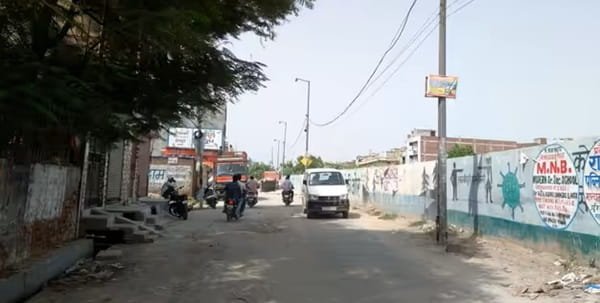
Shiv Vihar Quick Information
| Particular | Details |
|---|---|
| Locality | Shiv Vihar |
| Wider Area | Karawal Nagar |
| Region | North-East Delhi |
| Common PIN Code | 110094 |
| Main Metro Station | Shiv Vihar |
| Metro Line | Pink Line |
| Other Useful Metro Stations | Johri Enclave, Gokulpuri |
| Metro Station Location | Delhi-UP border/Loni border side |
| Important Roads | Karawal Nagar Main Road, Johripur Road, Loni Road/NH-709B |
| Nearby Areas | Karawal Nagar, Johripur, Mustafabad, Dayalpur, Gokulpuri, Loni |
| Nearby Bus Hub | Karawal Nagar Bus Terminal |
| Local Transport | Buses, autos, e-rickshaws and cabs |
Where Is Shiv Vihar Located?
Shiv Vihar is located around Karawal Nagar in North-East Delhi, close to Delhi’s boundary with Loni in Ghaziabad, Uttar Pradesh.
It is not one uniform residential block. Government planning and delimitation records identify multiple Shiv Vihar phases, including Phases III, IV, V, VI, VII, VIII, IX and X in the Karawal Nagar census-town area. Other government planning documents also identify Phase I.
This phased layout is important for visitors. A route suitable for Phase IV may not be the most convenient for Phase VIII or another pocket. Always use the full phase, block and street information when searching for an address.
The wider locality is surrounded by areas such as Karawal Nagar, Johripur, Dayalpur, Mustafabad and Loni.
Shiv Vihar Metro Connectivity
Shiv Vihar Metro Station is an elevated Delhi Metro station on the Pink Line. It opened on 31 October 2018 and is located near the Delhi-UP/Loni border.
The station serves as the terminal for the Shiv Vihar branch of the Pink Line. This gives residents an important rail connection into Delhi’s wider Metro system.
Other stations that may be more convenient for certain parts of the locality include:
- Johri Enclave
- Gokulpuri
For example, residential information for some Shiv Vihar pockets places Johri Enclave roughly 1–3 km away, although the actual distance varies significantly according to the phase and starting street.
Therefore, travellers should not automatically assume Shiv Vihar Metro Station is the closest option simply because it carries the locality’s name.
An Important Point About the Pink Line
The Pink Line network has undergone operational changes as the wider circular corridor has developed. For passengers heading specifically towards the Shiv Vihar branch, the train destination shown at the station should always be checked carefully.
The Shiv Vihar branch runs through stations including Gokulpuri and Johri Enclave before terminating at Shiv Vihar.
When planning a journey from another Pink Line section, follow the live DMRC platform display and route instructions for the Shiv Vihar-bound service rather than assuming every Pink Line train terminates at Shiv Vihar.
Road Connectivity of Shiv Vihar
Road transport remains essential in Shiv Vihar because of the locality’s size and its numerous internal phases.
Important roads in and around the area include Karawal Nagar Main Road, Johripur Road and the Loni Road/NH-709B corridor. These routes provide access towards Karawal Nagar, Gokulpuri, Mustafabad, Shahdara and the Delhi-UP border.
Smaller internal roads such as 30 Feet Road and 33 Feet Road serve different residential pockets.
Traffic can become slow on busy local roads, especially around markets, major junctions and commuting hours. For destinations deep inside a residential phase, e-rickshaws and autos are often more practical than larger vehicles.
Bus and Local Transport
Karawal Nagar Bus Terminal is an important bus facility close to Shiv Vihar. Local transport information places it roughly 1–2 km from some central Shiv Vihar pockets, although the distance varies according to the phase.
Residents also commonly depend on:
- DTC/Delhi city buses
- E-rickshaws
- Shared autos
- Regular auto-rickshaws
- App-based cabs
- Private two-wheelers
E-rickshaws are particularly useful for travelling between residential lanes, Karawal Nagar and nearby Metro stations.
Nearby Areas Around Shiv Vihar
Karawal Nagar
Karawal Nagar is the main larger locality associated with Shiv Vihar. It contains dense residential neighbourhoods, local markets, schools and everyday services. Government records repeatedly identify Shiv Vihar phases as part of the Karawal Nagar census-town area.
Johripur
Johripur lies close to Shiv Vihar and provides another route towards the Pink Line through Johri Enclave. It is particularly relevant for residents living on the eastern and southeastern side of the wider locality.
Mustafabad
Mustafabad is a large residential area near Shiv Vihar and Karawal Nagar. Road connections provide access between these densely populated North-East Delhi neighbourhoods.
Dayalpur
Dayalpur is another nearby residential locality. Some Shiv Vihar and Karawal Nagar pockets are closely connected with the Dayalpur side through internal roads.
Gokulpuri
Gokulpuri is important because it has its own Pink Line Metro station. It also provides road connections towards Yamuna Vihar, Shahdara and other parts of North-East Delhi.
Loni
The Uttar Pradesh city of Loni begins close to Shiv Vihar’s northeastern side. Shiv Vihar Metro Station itself is positioned near the Delhi-UP border, making the station useful for some commuters coming from Loni as well.
Markets and Everyday Facilities
Shiv Vihar has a neighbourhood-oriented commercial character. Rather than depending on one large shopping district, shops and services are distributed along its main roads and different phases.
Residents have access to local:
- Grocery and general stores
- Vegetable and daily-needs markets
- Medical shops and clinics
- Schools and coaching centres
- Clothing and footwear stores
- Restaurants and street-food outlets
- Repair and household services
Karawal Nagar provides additional shopping options, while larger commercial areas can be reached towards Yamuna Vihar, Shahdara and other parts of East and North-East Delhi.
Future Connectivity Around the Wider Area
Transport infrastructure around the wider Karawal Nagar-Bhajanpura-Yamuna Vihar belt is continuing to develop.
As of October 2026, Delhi’s integrated Yamuna Vihar-Bhajanpura Metro/flyover double-decker project was reported to be about 88% complete, with completion targeted for December 2026. The approximately 1.4-km structure is expected to help reduce congestion along the wider Mangal Pandey Marg corridor.
This project is not inside every Shiv Vihar pocket, but it is relevant to the wider North-East Delhi transport network used by residents travelling towards Bhajanpura and the Yamuna crossing side.
How to Reach Shiv Vihar
By Delhi Metro
Take the Delhi Metro network towards the Pink Line’s Shiv Vihar branch and get off at Shiv Vihar Metro Station. Johri Enclave or Gokulpuri may be more convenient if your destination is in a different part of the locality.
From the station, use an auto or e-rickshaw for the final journey if the address is inside one of the residential phases.
From Kashmere Gate
Metro passengers can use the Delhi Metro network and interchange for the Pink Line/Shiv Vihar branch. Because services and interchange arrangements can change, check the live DMRC journey planner for the fastest connection.
By road, buses and cabs towards North-East Delhi provide another option.
From Shahdara
Shahdara is connected with the wider Karawal Nagar area through the North-East Delhi road network. A bus, auto or cab can be used depending on the exact starting point.
Metro passengers can also use the Red and Pink Line network with the required interchange.
From Karawal Nagar
Shiv Vihar is directly associated with the wider Karawal Nagar area. For many journeys between the two, an e-rickshaw, auto or local bus is the simplest option. Karawal Nagar Bus Terminal is also close to several Shiv Vihar pockets.
From Loni
Travellers coming from Loni can approach the locality through the Delhi-UP border road network. Shiv Vihar Metro Station is positioned close to the Loni border, making it an important public-transport point for this side of the NCR.
By Car or Cab
Do not enter only “Shiv Vihar” into navigation if you have a detailed address. Use the complete phase, block, street and nearby landmark. The locality has numerous phases and dense internal streets, so the correct final approach can vary substantially.
FAQs About Shiv Vihar, Karawal Nagar
Q1. Which metro station is nearest to Shiv Vihar, Karawal Nagar?
A. Shiv Vihar Metro Station on the Pink Line is the main station associated with the locality. However, Johri Enclave or Gokulpuri may be closer to some Shiv Vihar phases, so the best station depends on the exact address.
Q2. What is the PIN code of Shiv Vihar, Karawal Nagar?
A. Shiv Vihar in the Karawal Nagar area is generally associated with PIN code 110094. Delhi government planning records list several Shiv Vihar phases with Delhi-110094 addresses.
Q3. Which areas are near Shiv Vihar?
A. Karawal Nagar, Johripur, Mustafabad, Dayalpur, Gokulpuri and Loni are among the important nearby areas. Because Shiv Vihar lies near Delhi’s northeastern boundary, parts of Ghaziabad district in Uttar Pradesh are also close by.
Q4. Is Shiv Vihar Metro Station inside the main residential colony?
A. The station is located on the Delhi-UP border near the Shiv Vihar/Karawal Nagar side, but it is not equally close to every residential phase. Some pockets may require an auto or e-rickshaw journey, and Johri Enclave can be more convenient for certain addresses.